Nature diary: February
The end of the Winter may still feel like it’s a little while from now, but for nature in the valley, February is prime time for early starters to get ready for the times of growth and bounty to come.
Look up at the trees in the valley and you will see that some are not like the others. You may catch, dangling down in the sun, the little golden threads of Hazel and Alder catkins. These are also known as Lambs tails, because they look like the fluffy wagging tails of newborn lambs. These are the male flowers; as they open, they will begin to emit pollen, which will then land on the little fuzzy red tips of branches, the female flowers; to pollinate them. Once pollinated, the female flowers will later develop into the fruits, which for Hazel will be hazelnuts.
You might also notice the Goat Willow begin to bud, with silvery buds on the tip of each branch which gives it its other name of Pussy Willow, as the buds resemble a fluffy cat’s paws. By the time the first warmer sunny days come, the Goat willow will sprout bright yellow, fluffy catkins of its own, as it does so it becomes a first winter bounty for bumblebees and hoverflies.
The first sunny spells are when you may catch your first butterfly of the year, likely a Small Tortoiseshell or Red Admiral, who will have been overwintering in a sheltered place and come out on warmer days.
Birds will start to appear again too. You may spot a Nuthatch engaging in its namesake activity, caching a supply of nuts and acorns within its fiercely defended territory. As other food supplies begin to dwindle Nuthatches will wedge one of their cached nuts in between the cracks of a tree trunk to hold in place, while they use their beak to ‘hatchet’ the hard shell open and eat the contents.
Long-tailed tits have been busy foraging all winter, but this month you may begin to spot some with nesting material in their mouth, this may seem like a very early start for a bird to begin nesting. However, this is no ordinary bunch of twigs stuck together, this is a wonderful piece of modern art made of moss and spider’s silk that takes around 3 weeks to craft! So, you can understand why they begin so early.
This time of year, while the trees are still bare is your best bet at seeing one of the more inconspicuous residents in St Annes, the Treecreeper. This tiny little bird darts up the trunk of trees in any densely wooded area to catch flies and spiders with its scimitar shaped beak. Its back is perfectly camouflaged so that it looks like any other piece of bark, and it has little hooked claws on its feet help it grapple up the trees at great speed. Once it has reached the top of the trunk, it then flutters back down to the next tree to begin it all again; as despite how it may look perfectly suited for vertical life, it cannot climb upside down, unlike its cousin the Nuthatch, which will happily climb in any direction.
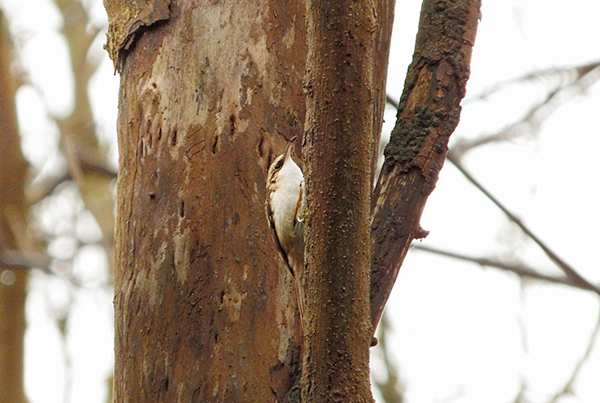
While in woodland you are likely to never be more than 500m away from a Treecreeper, however they are almost impossible to see, your only chance is if you catch a glimpse of one’s white belly as it moves around the side of a tree.
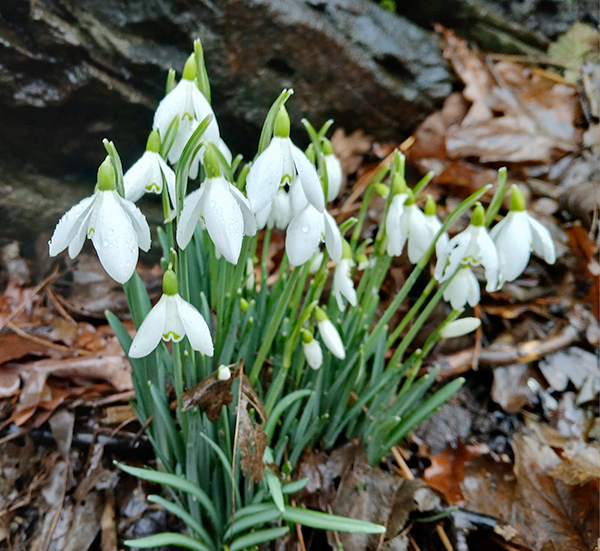
While you observe the wonders happening above your head, do not neglect to have your eye on the ground, as the first snowdrops have already begun to flower, green and white erupting from the leaflitter at the base of trees.
Giorgia Comana – Chair