A Bid to Increase Biodiversity: Creating a Wetland Wildflower Meadow
It has long been my dream to create a wetland wildflower meadow in the St Anne’s Valley. When I applied for the CIL (Community Infrastructure Levy) grant I had this in mind. In addition to requesting funding for the dragon sculpture, the container/tool shed and tools, I applied for £450 to spend on wetland wildflower plugs.
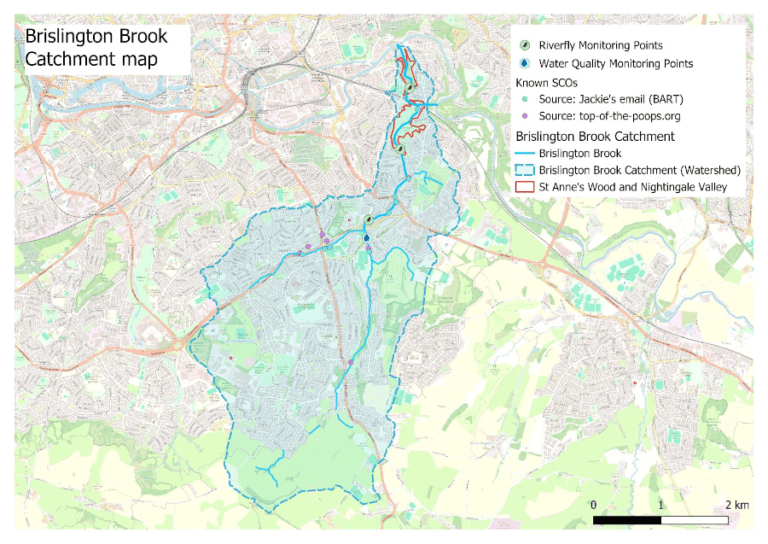
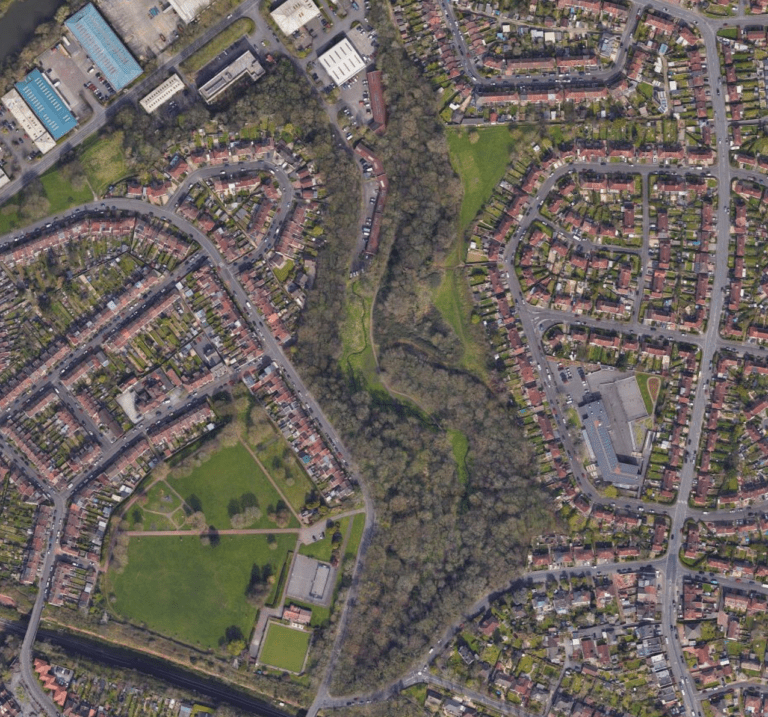
The low-lying zone next to the meandering Brislington Brook is conducive to growing wetland wildflowers. It serves as a floodplain, a natural catchment area during heavy rainfall. The site I had in mind was in St Anne’s Wood: the area of land bordering the brook between the dragon sculpture and the multi-boled sycamore. It had been taken over by hogweed and nettles, fast-colonising plants. Both grow vigorously via underground rhizomes, creating a tall canopy and outcompeting shorter or less robust wildflowers. The site is also a hotspot for Himalayan balsam. A redeeming factor is that it contains some fine specimens of pendulous sedge – an ancient woodland-indicator plant – which were largely overshadowed by the hogweed and nettles.
The first task was to create a planting plan, a necessary requirement for the risk assessment. Initially, I made a rough sketch of the area. Oliver, FoBB’s Community Allotment Coordinator, then kindly created a digital version of the plan.
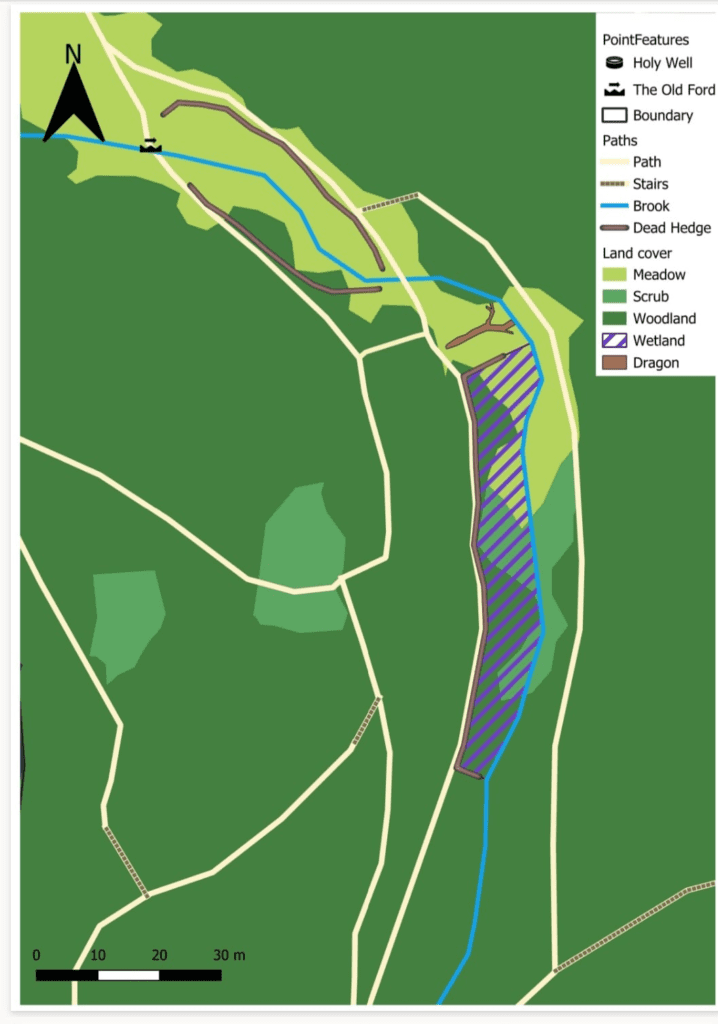
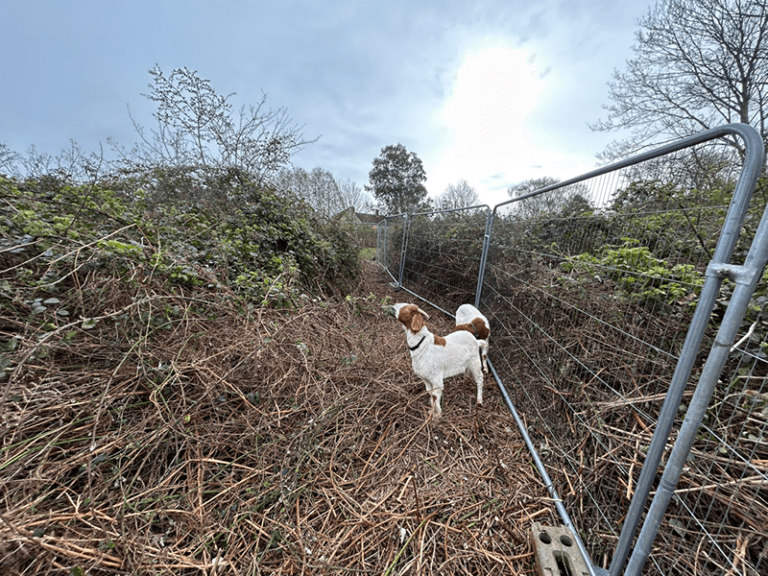
The second task was to construct a dead hedge around the site to protect the wildflowers, once we’d planted them. A dead hedge is a sustainable, eco-friendly barrier built by tightly stacking and weaving branches between vertical wooden stakes. This is where the corporate work party came in. Between us – that is, the twenty-four corporate volunteers and three FoBB volunteers, Geoff, Cristina and myself – we created a dead hedge that was 33 metres long and 10 metres wide, tapering down to 3 metres at one end. In total, the surface area for planting is around 300 square metres! We worked for five hours and very nearly completed the dead hedge. The corporate volunteers have expressed a keen interest in coming back to finish the task soon.
The next step was to dig up the hogweed and pull up the nettles. Cristina and I have been working on clearing the space for the past three weeks; Geoff has also put in many hours.
The penultimate step was to order the plug plants. I purchased the plugs from five different suppliers: Celtic Wildflowers, Frenchay Nursery, Grow Outdoors, Meadowmania and Water Garden Plants. All specialised in native UK wildflower plug plants propagated and sourced within Britain, but no one supplier had all the plants I wanted.
Here’s a list of the plants I ordered, along with the pollinators they support:
| Wild flower – Florescence | Anthesis | Attracts |
|---|---|---|
| Althaea officinalis Marsh Mallow  | Aug-Sep | Bumblebee Honey bee Miner bee Hoverfly Gatekeeper Large white Small white Painted lady caterpillar Mallow moth caterpillar |
| Caltha palustris Marsh marigold  | Mar-May | Queen bumblebee Honey bee Solitary mining bee Sweat bee Giant bee fly Red admiral Peacock Hairstreak |
| Cardamine pratensis Cuckoo flower  | Apr-Jun | Queen red-tail bumblebee Honeybee Solitary bee Orange tip Green-veined white Sulphur tuft moth |
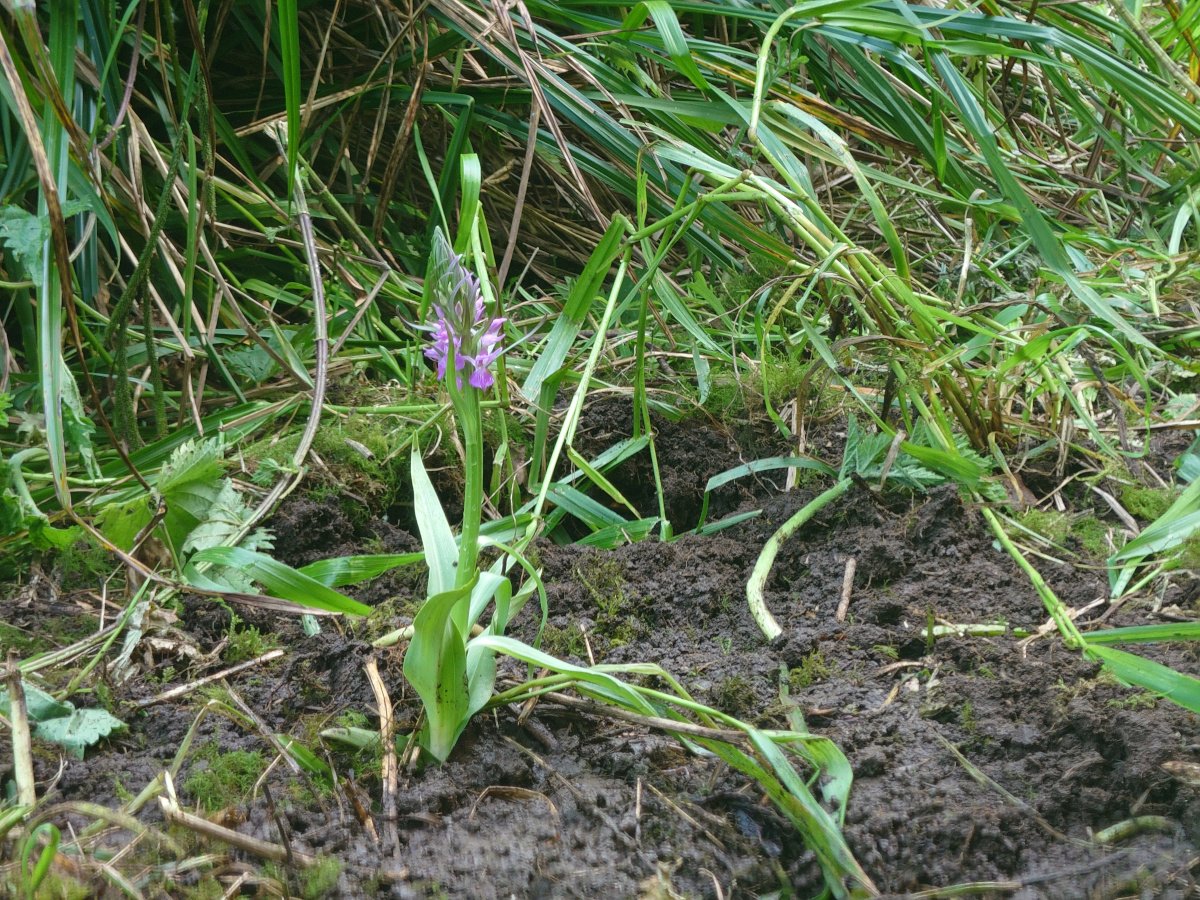
| Dactylorhiza praetemissa Southern Marsh Orchid  | Jun-Jul | Cuckoo bee Large skipper |
| Digitalis purpurea Foxglove  | Jun-Sep | Bumble bee Common carder bee Honey bee |
| Iris pseudacorus Yellow Flag Iris  | May-Jun | Honey bees Damselflies Hoverflies |
| Lythrum salicaria Purple loosestrife  | Jun-Aug | Red-tailed bumblebee Tree bumblebee Honey bee Sweat bee Hoverfly |
| Mentha aquatica Water Mint  | Jul-Oct | Bumblebee Honeybee Solitary bee Peacock Comma Small tortoiseshell Small copper Mint moth Buff ermine moth |
| Silene flos-cuculi Ragged robin  | May-Jul | Bumblebee Garden bumblebee Honeybee Common blue Campion moth caterpillar Lychnis moth caterpillar Marbled coronet caterpillar |
| Silene dioica Red campion  | May-Sep | Garden bumblebee Honeybee Buff-tailed bumblebee Brimstone Orange tip Green-veined white Small white Hummingbird hawkmoth Campion moth caterpillar Lychnis moth caterpillar Marbled coronet caterpillar |
| Succisa pratensis Devil’s bit scabious  | Jul-Oct | Common carder bee Solitary bee Marsh fritillary |
| Valeriana dioica Marsh Valerian  | Apr-Jun | Green hairstreak Small tortoiseshell Green-veined white Swallowtail caterpillar Sawfly |
The final step is planting the wildflowers. This is the stage we’re at now. At the beginning of the week, Cristina and I planted foxgloves and southern marsh orchids in the nascent wildflower meadow. It was a momentous occasion! Keeping them hydrated during the heatwave was a challenge. I’ve potted up the remaining 150 plug plants and am trying to bring them on. They were 2cms tall when they arrived. Once they reach 6cms, Cristina and I will plant them.
The wetland wildflower meadow will take some time to establish. The metre long runners of the pernicious hogweed keep producing new plants. Once all the plugs have been planted, we’ll scatter wildflower seeds (that we’ve harvested) to fill in the spaces.
The meadow will also need to be maintained. Left to its own devices, the soil will become too fertile. This means cutting back the wildflowers in late summer, and taking the organic matter to FoBB’s compost heap in the Community Allotment. If we were to leave the material in situ, it would rot into the soil and add nutrients. More aggressive plants would once again take hold.
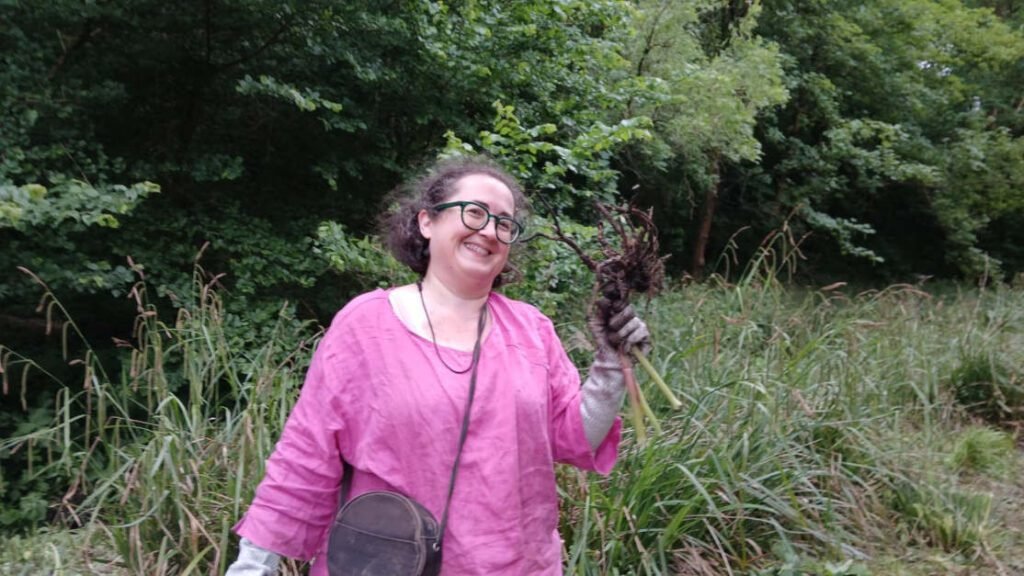
I would like to take this opportunity to thank FoBB volunteers Geoff and Cristina for helping to turn my dream of creating a wetland wildflower garden into a reality. I am also indebted to the corporate volunteers who worked relentlessly and tirelessly on a hot day.
I hope the wetland wildflower meadow will go some way towards increasing the population of macro-organisms in St Anne’s Wood, as well as contributing to the overall health of the environment by stabilising soil, improving water quality, and providing habitat for other wildlife.
Why don’t you pop along to see how it’s shaping up? It’s going to be awesome!
Jackie Friel
Vice Chair